
I Don’t Want a Community for My Games
I want people to play my games. I just don’t necessarily want to spend my life talking to them.
There is a particular piece of advice that seems to come up over and over again when you start talking about making an indie game: build your community.
Start a Discord. Start a subreddit. Post constantly. Talk to players. Make developer updates. Build an audience before the game launches. Keep people engaged between updates. Answer questions, run events, collect feedback, and make sure everyone knows what you’re working on.
And I understand why. If you’re trying to sell a game, having people who are excited about it is obviously a wonderful thing. Having players who care enough to talk about what you’ve made is something most developers would be thrilled to have. But I’ve realized something about myself as I get back into making games: I don’t want a player community. Not because I don’t appreciate players. Quite the opposite.
I love the idea that someone might spend an evening playing something I made. I love knowing that somebody bought a game with their own money, installed it, and decided it was worth their time. I love seeing people discover weird little things I put into a game or find their own ways to play it. That part sounds wonderful to me. The part I’m not interested in is everything that comes afterward.
I Want to Make Games, Not Manage an Audience
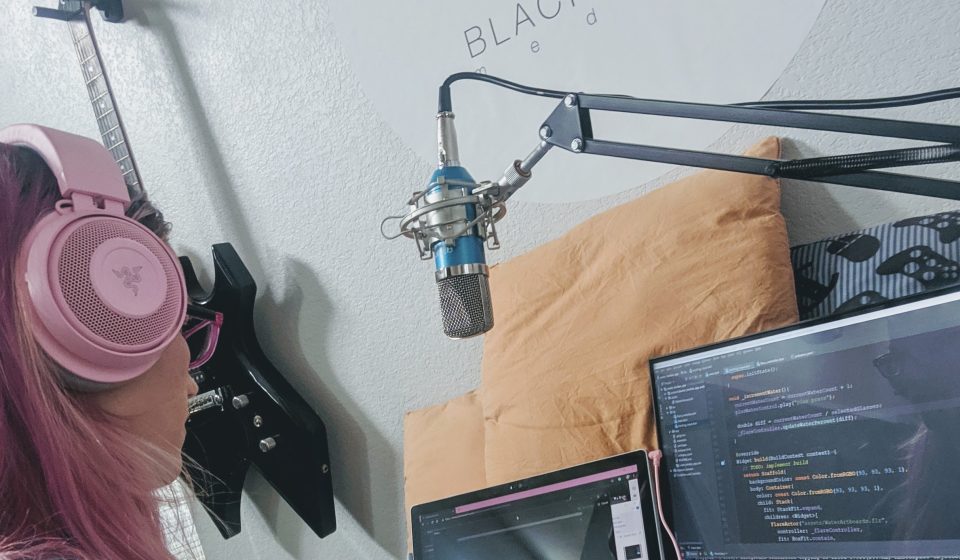
I’m an introvert. I’m a programmer. I like making things, particularly the parts of development where I can get completely absorbed in a problem and forget that the rest of the world exists. I can happily spend hours thinking about a mechanic, debugging something ridiculous, designing a system, or trying to figure out why one tiny thing isn’t behaving the way I think it should. Those are the kinds of problems I actually enjoy solving.
Put me in a Discord server with hundreds of people expecting me to regularly interact with them, however, and suddenly I have a completely different job. Now I’m a community manager. And I don’t particularly want that job.
There is a difference between having players and building a community, and I think that distinction sometimes gets lost. I want the first one. I’m not sure I want the second.
The Internet Has Turned “Community” Into a Second Product
Modern game development can sometimes feel like you’re expected to create two things. First, you make the actual game. Then you make the internet presence surrounding the game.
That second product can become enormous. There are social accounts to maintain, announcements to write, developer updates to publish, Discord conversations to participate in, questions to answer, feedback to sort through, and community expectations to manage. Even after the game is finished, there can be an ongoing expectation that the developer remain constantly present.
None of those things are inherently bad. For some developers, they’re probably genuinely enjoyable. Some people are fantastic at building communities. They like talking to hundreds or thousands of people, they enjoy being visible, and they thrive on that interaction.
I think that’s great. I just don’t think every developer needs to become that person.
Sometimes I wonder if we’ve created an industry where being an excellent community manager is quietly becoming part of the definition of being an indie developer. If that’s the case, I’d like to make room for the developers who would rather just go back to their computers.
I Still Want to Know What People Think
This is where the distinction gets important, because I don’t want to come across as someone who doesn’t care about the people playing my games.
I want feedback. I want reviews and bug reports. I want to know when something is confusing or frustrating, and I absolutely want to hear when someone discovers a part of the game that they particularly enjoyed. I want to hear that somebody played it with their kid, stayed up too late playing it, or laughed at something I put in there because I thought it was funny. Those things mean something to me. What I don’t necessarily want is to be on call for my players.
I don’t want to feel like I need to answer every message or spend my evenings moderating arguments between strangers. I don’t want to spend money on elaborate community infrastructure, and I don’t want to manufacture engagement because an algorithm has decided my game needs a constant stream of content to remain relevant. Most of all, I don’t want to spend more time talking about making games than actually making them.
There Is a Kind of Freedom in Being Small
Maybe this is partly because of where I am in my life now. I’m not trying to build the next giant game studio, become an influencer, or turn myself into a recognizable internet personality. I’m not trying to have millions of followers waiting for my next announcement. I want to make games I’m proud of. I want to publish them. I want to find the people who enjoy them. Then I want to go make the next one. There is something incredibly appealing about that simplicity.
I’m increasingly interested in building a business around the things I actually enjoy doing rather than building a business around all the things the internet tells me I should enjoy doing. Maybe that means my games won’t have enormous communities. Maybe they won’t generate endless discussion or become the next big thing on Discord. I’m okay with that.
My Players Don’t Owe Me a Community
I don’t think players owe me one, either.
If someone buys my game and never joins a Discord server, that’s completely fine. If they play it for three hours and never tell me what they thought, that’s fine too. If they leave a review, I’ll be grateful. If they recommend it to a friend, I’ll be even more grateful. And if they quietly enjoy it and move on with their lives, I’m still happy they gave it a chance.
A game doesn’t have to become someone’s identity. It doesn’t have to become a lifestyle, have a fandom, or require an ongoing relationship between its creator and its players. Sometimes a game can just be a game: something you buy, something you play, something you enjoy, and then you go do something else. I think that’s okay.
I don’t need my games to become communities. I just want them to become experiences people remember fondly.
So What Am I Actually Building?
I’m building games.
That’s the part I keep coming back to. I want to write code, design mechanics, experiment, and make strange little things that probably wouldn’t survive a meeting at a large studio. I want the freedom to make something because I think it’s fun, and then put it somewhere people can buy it.
If people love it, I’ll be delighted. If people have feedback, I’ll listen. If somebody finds a bug, I’ll fix it. If someone writes a nice review, I’ll probably read it several times. But I don’t want the success of the game to depend on me becoming a full-time personality around it.
Maybe that’s not the new-traditional indie development playbook, and that’s okay. I’m an introvert programmer who likes making games. I’d like to leave a little room in the industry for that to be enough.